

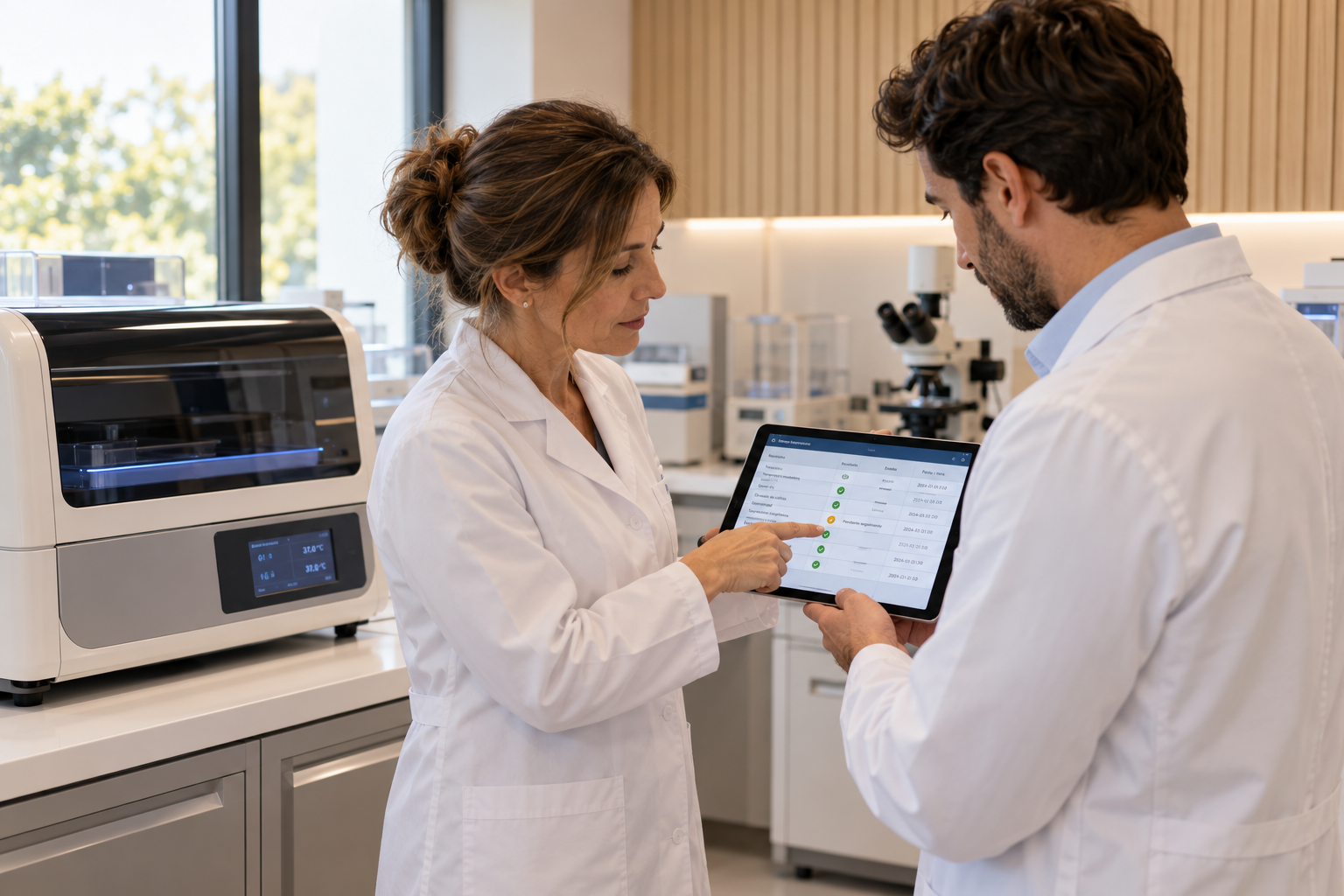
Digitalising quality management can make it easier to carry out checks and follow up on incidents. For this to work, the information must be easy to record, find and use.
In an assisted reproduction laboratory, quality is maintained and reviewed every day. Equipment conditions are checked, materials are reviewed, maintenance is carried out and situations that need action are addressed.
Records help document this work. However, their purpose goes beyond saving a value or marking a task as complete. When a check identifies a deviation, the record should also cover the steps that follow.
This is where we see the difference between keeping a collection of notes and having records that help manage quality.
From the check to the resolution
Imagine that, during a routine check, a professional finds a reading outside the agreed range. They record the value and follow the laboratory’s procedure: report the situation, check the reading and assess what action is needed.
Detection is only the beginning. The next steps are to assign responsibility for the action, document what is done and check the result before considering the incident resolved.
If the value is written on a sheet, the notification is sent by email and the response is shared verbally, following up will depend on bringing together information from different places. At a shift change, it may be difficult to know whether the equipment has been checked or whether another check is still pending.
An organised record makes it possible to follow the whole sequence:
- what was detected,
- who was involved,
- what action was taken,
- what the result was.
This gives the person who continues the work the context they need.
How digitalisation can help
- Searching by equipment, date or type of check helps find specific information.
- Identifying the person who carried out a check provides traceability.
- Linking observations and actions to an incident makes it easier to follow its progress without having to piece together information from different sources.
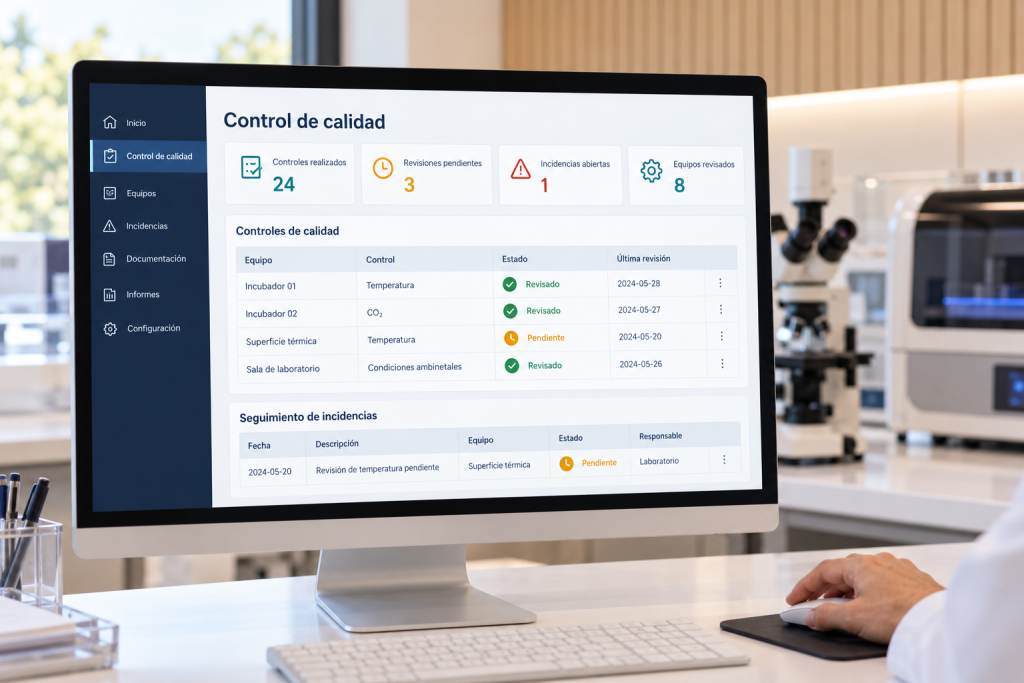
This organisation also makes internal reviews and audits easier. The team can show the checks completed and the documentation of the actions taken when a problem occurred.
The value lies in reducing the effort needed to find and use information. To achieve this, the tool must fit into the laboratory’s routine, with clear forms, relevant fields and simple steps that make it easier to record information at the right time.
Good records need clear criteria
Before digitalising a check, we need to define how it is managed: what is checked, how often, who is responsible and what to do when a result needs attention.
It is also useful to agree on what information must be documented and which checks are needed before an incident can be closed. These criteria help prevent people from recording information differently or considering an action complete at different stages.
For example, a note saying “equipment checked” may leave questions unanswered. Recording what was checked, the result and whether another review is needed makes it clear what was actually done.
The tool supports the process, but the laboratory’s procedures determine what must be done and how completion is verified.
Making use of past experience
Over time, records build a history that can be very useful when reviewing the laboratory’s work.
When an incident happens again, the team can look at how it was handled before and assess whether the actions taken were sufficient. They can also identify organisational difficulties, such as checks that are often completed late or actions left open without a clear person responsible.
This review helps the team make improvements based on experience: adjust a procedure, clarify a responsibility or add an extra check.
Documenting the conclusions preserves what has been learned and makes it available to the team, even when the people involved in the case change.
Information that supports daily work
Quality requires clear procedures, professionals who follow them and follow-up on the actions taken. Digitalisation supports this work when it makes documentation accessible and useful.
A good record shows what happened, what action was taken and what is still pending.